


- News
- 458 views
What Is the Best EV Charger for a Hotel?
For a hotel, the best EV charger is not necessarily the most powerful one. It is the one that makes guest charging easy, keeps energy costs under control, and fits smoothly into day-to-day hotel operations.
EV Charging Is a Genuine Hotel Service
A guest booking a room with parking mainly wants to leave the next morning with enough charge in their vehicle. In this context, a smart AC charging station, available for several hours or overnight, will generally meet the guest’s needs better than an ultra-fast charger, which is more expensive to install and operate.
For hotel operators, the charging station also needs to be simple to manage. Reception staff should not have to deal with mobile apps, card-payment transactions, billing disputes, or manual meter readings.
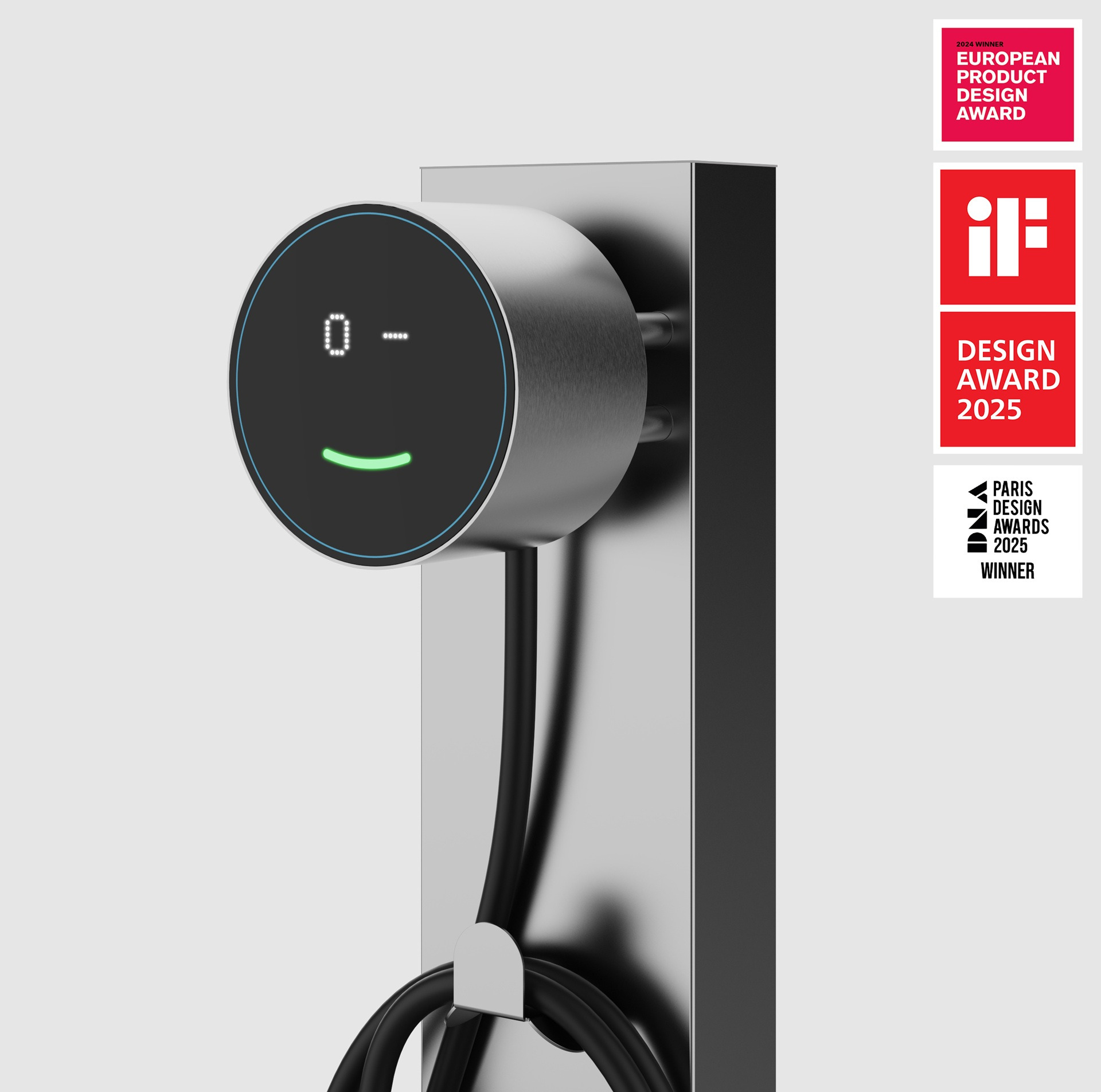
This is where Voltie stands out: the solution combines smart power management, RFID access control, remote monitoring, and automated reporting.
Why Choose Voltie for a Hotel?
Voltie is designed to make EV charging easy to offer, manage, and scale. For hospitality businesses, its value rests on four key advantages:
- A simple guest experience: the guest plugs in and identifies themselves with an RFID card provided by the hotel, or uses the charging-start method configured by the property.
- Controlled access: charging stations can be reserved for guests, staff, service vehicles, or selected partners. RFID credentials can be named, configured, and deactivated whenever necessary.
- A scalable installation: Voltie can dynamically distribute available power between several charging stations while taking the building’s overall electricity consumption into account. This helps avoid unnecessary electrical upgrades or oversized grid connections.
- Simplified operations: remote management, software updates, and regular reports reduce on-site intervention and make charging usage easier to monitor.
The Key Advantage: RFID Cards with Time or Energy Allowances
The most useful feature for many hotels is access management through RFID cards with a time or energy allowance.
Instead of installing a payment terminal, creating complex tariffs, or asking guests to download an app, reception can simply provide an RFID card authorised for a specific charging period or a defined amount of energy.
The hotel can therefore create a clear charging policy that matches its commercial positioning:
| Hotel Offer | Example RFID Rule |
|---|---|
| Charging included with the room | A card granting an energy allowance for the duration of the stay |
| “Overnight stay + charging” package | A card limited to a defined period, such as overnight |
| Premium guest or loyalty-program benefit | A higher energy allowance assigned without any payment step |
| Staff charging | Named cards with specific access rights |
| Charging billed by reception | A card assigned to the guest, with accurate usage tracking |
This approach makes it possible to provide complimentary, included, or limited charging without managing a payment system directly at the charging station. The guest benefits from a straightforward process: they receive their RFID card, plug in their vehicle, and charge within the allowance assigned to them. The hotel retains full control over the electricity it provides.
Charging-session data—including the RFID credential used, energy delivered, and charging duration—can be tracked in reports. This helps monitor usage and, where relevant, add charging to the guest’s final bill.
A Solution Built for Hotel Operations
In a hotel, available electrical capacity is not unlimited. Kitchens, air conditioning, heating, laundry facilities, spas, lighting, and technical equipment can all create significant peak demand. Installing several EV chargers without energy management can lead to excessive electrical work or an unnecessarily high subscribed power capacity.
Voltie’s dynamic power distribution adjusts charging output according to the building’s consumption and the number of vehicles connected. This enables hotels to deploy several charging points while protecting their electrical infrastructure and keeping energy costs under control.
This capability is especially useful for hotels that want to begin with a small number of chargers and expand gradually as guest demand and occupancy increase.
An EV Charger That Enhances the Guest Experience
EV charging should not create extra questions or friction at reception. A clear, visible, and pleasant-to-use charging station directly improves the guest’s perception of their stay.
Voltie provides useful charging information, including delivered energy, elapsed charging time, and charging power. Its LED light indicator also makes it easy to see whether the station is available, charging, completed, or experiencing an issue. These settings can be configured to respect the hotel environment, particularly during the night.
Available tethered cables in different lengths also make charging easier in a hotel car park: guests do not necessarily need to bring their own cable or park with perfect precision.
Is Voltie the Best Choice for a Hotel?
For a hotel, the best EV charger is the one that meets guest expectations, works within the building’s electrical constraints, and supports the realities of daily operations.
Voltie is an excellent choice for hotels that want to:
- Offer EV charging as a valuable guest amenity.
- Restrict charger access to guests and authorised users.
- Provide a time- or energy-based charging allowance through RFID cards, without installing payment terminals.
- Track charging consumption without manual meter readings.
- Install multiple chargers without unnecessarily oversizing electrical infrastructure.
- Expand the charging installation as demand grows.
By combining RFID access control, usage tracking, automated reporting, and dynamic power management, Voltie turns EV charging into a simple, controlled, and value-adding hospitality service.
Would you like to equip your hotel car park with a Voltie EV charging solution? Europe-EV can help you select the right configuration for your property, its available electrical capacity, and its guest-service policy.